
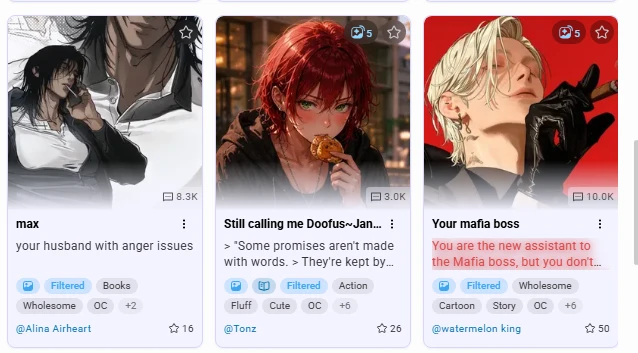
AI characters can be based on fictional characters, but their creation requires more than copying names, appearances, or dialogue. Modern AI systems use language models, personality instructions, memory functions, and behavioral settings to reproduce character traits. By 2025, AI companion platforms had reached millions of users worldwide, showing strong interest in interactive fictional personalities. The challenge is creating AI characters that feel consistent with the original fictional identity while still producing new conversations.
Fictional characters provide useful material for AI development because they usually have detailed backgrounds, recognizable speech patterns, and clear emotional styles. A character from a video game, novel, or animation may have years of published content that describes their relationships, beliefs, and reactions.
Developers usually convert this information into structured character settings. Instead of only collecting sentences spoken by a character, they analyze:
| Character Information | AI Character Application |
|---|---|
| Personal history | Memory and background responses |
| Speaking style | Word choice and sentence patterns |
| Personality | Emotional reactions and preferences |
| Relationships | Conversation behavior |
| Goals | Long-term interaction style |
This approach allows an AI character to answer questions that never appeared in the original story. For example, a fictional hero can discuss a new situation while still following the same personality rules. A calm strategist should continue to analyze problems carefully, while an energetic character should maintain a more expressive communication style.
The need for consistency has increased as AI conversations become longer. In 2023 and 2024, large language models improved their ability to maintain context across thousands of words, allowing users to have extended conversations with digital characters. Some AI companion platforms reported millions of monthly visitors, showing that users are interested in more personalized interactions.
A fictional character is recognized not only by what they say, but also by how they react when facing unfamiliar situations.
This difference separates AI character creation from simple text imitation. A database of quotes may reproduce familiar phrases, but it cannot automatically reproduce personality. AI systems need additional instructions about values, emotional responses, and communication habits.
For example, creating an AI version of a detective character requires more than adding words such as “smart” or “logical.” The system needs information about how the character collects information, how they evaluate risks, and how they communicate with others.
| Traditional Character | AI Character Version |
|---|---|
| Fixed story scenes | Continuous conversations |
| Writer-controlled actions | User interaction-based responses |
| Limited dialogue | New generated conversations |
| Passive audience experience | Interactive experience |
The development of AI fictional characters has expanded into entertainment, gaming, education, and virtual companionship. Companies are exploring ways to allow users to interact with characters from different fictional styles, including fantasy heroes, game personalities, and original AI creations.
Anime and game characters are often suitable for AI adaptation because they usually have clear personality descriptions. A character may have hundreds of episodes, thousands of dialogue lines, and detailed fan discussions that help developers understand their behavior.
A 2024 survey from digital entertainment research groups showed that younger users were among the most active groups using AI companion services, with users under 35 representing a large percentage of engagement on several platforms. These users often prefer characters that provide conversation, storytelling, and emotional interaction rather than simple information.
The growth of AI characters has also created new discussions about copyright and ownership. Fictional characters are protected creative works, and companies must consider licensing agreements when creating commercial AI versions.
For example, an unofficial AI based on a famous movie character may attract users, but commercial use can create legal questions. In contrast, original AI characters designed with similar personality concepts allow creators to develop new digital personalities without depending on existing franchises.
The difference between inspiration and direct reproduction is important. A character can share general features with existing fictional personalities, but copying unique names, stories, and recognizable elements may require permission from copyright owners.
AI characters have also created new categories of online interaction. Some users search for role-playing experiences, while others use AI characters for entertainment or personal conversation. Certain platforms include adult-oriented character settings, including discussions around ai nsfw content, which has increased debate about moderation, age control, and responsible design.
The same technology that creates friendly fictional companions can also create characters designed for very different types of interaction.
Because AI characters can generate unlimited responses, developers must create systems that control behavior quality. A fictional personality that changes randomly may reduce user interest, while a character that follows strict rules may feel less natural.
Modern AI character systems often combine several technologies:
| Technology | Purpose |
|---|---|
| Large language models | Generate conversations |
| Memory systems | Store previous interactions |
| Character prompts | Maintain personality |
| Safety filters | Control inappropriate responses |
| Voice generation | Create realistic speech |
The improvement of voice and visual technologies has further changed AI characters. In 2025, text-based interaction was increasingly combined with speech synthesis, facial animation, and virtual avatars. These additions allow users to communicate with characters through multiple channels instead of only written messages.
A virtual character with realistic voice, facial expressions, and long-term memory can create a different experience from traditional media. Films and games provide completed stories, while AI characters can respond to individual users.
This development may influence future entertainment production. Writers and game developers may create characters that are designed for both traditional storytelling and AI interaction. Instead of creating a character only for a movie or game, creators may build personalities that can continue interacting after the original content ends.
| Future Character Design | Possible Features |
|---|---|
| Interactive stories | User-controlled narratives |
| Long-term memory | Relationship development |
| Adaptive personality | Personalized communication |
| Multi-platform use | Games, apps, virtual worlds |
However, AI characters still face technical limitations. Language models can sometimes produce inaccurate information, inconsistent personalities, or responses that do not match the original character. Research published between 2022 and 2025 showed that maintaining stable personality behavior remains an active area of AI development.
Developers are improving these systems through better training methods, evaluation tests, and user feedback. The goal is not only generating realistic sentences but also maintaining a believable character over long periods.
The future of fictional AI characters will likely combine storytelling, software engineering, and user interaction design. A successful AI character will need a recognizable personality, reliable behavior, and the ability to create new experiences beyond the original story.
AI characters based on fictional characters are becoming a new form of interactive entertainment. They allow audiences to communicate with personalities that were once limited to books, films, and games, while creating new possibilities for digital storytelling.